
I've rebuilt my personal knowledge system 4 times this year. Each time I swore it was the last. Here's what I actually learned. I started where most people start: Notion. Then Obsidian. Then Tana. Now Anytype. Each migration came with a fresh wave of optimism and a growing suspicion that maybe the tool wasn't the problem. Turns out, the problem was how I thought about knowledge in the first place.
The rabbit hole
Notion didn't break anything for me. When you start thinking about knowledge and how it's interconnected, you figure out that a plain old note-taking approach is not suitable for this type of learning. My understanding outgrew the tool.
I don't think Notion is a bad product. It's amazing, and I'll recommend it to any organization setting up a knowledge base. But as I've been reading more and experiencing more about how knowledge is saved, stored, and recalled, I need something more robust for my personal efforts.
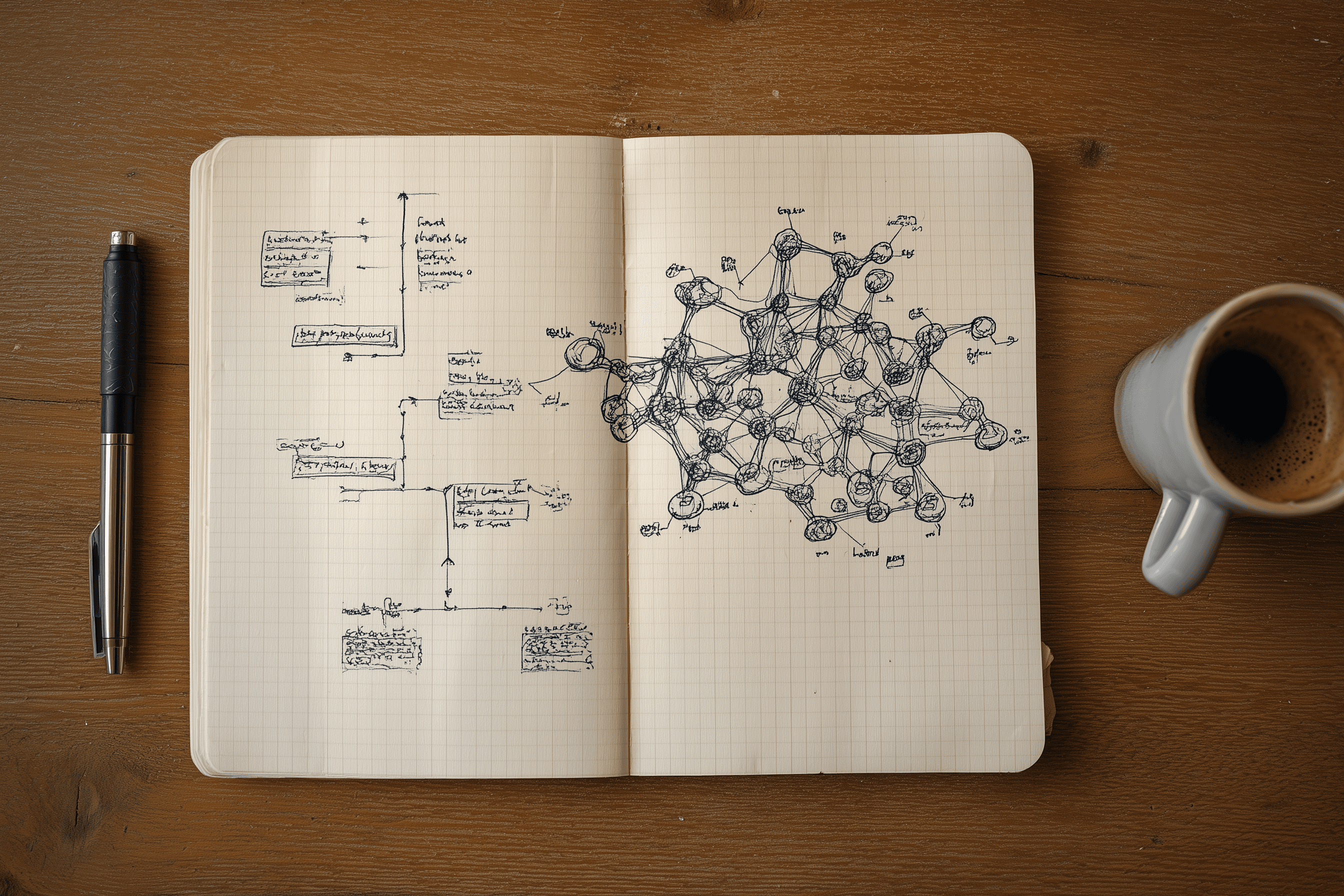
The real shift happened when I stopped thinking about documents the skeuomorphic way, considering them part of a folder. Where does this live? Is it in folder A or folder B? That question stopped mattering. Once you think in objects instead of locations, you realize it doesn't matter where something is stored as long as it exists somewhere and connects to somewhere; it will always be found back. That shift is only possible now because the software caught up.
Systems versus structures
There's a distinction that took me a while to articulate. A structure is a foundation of small elements building towards one big element: the DIKW pyramid (data, information, knowledge, wisdom) is a structure. A framework.
A system is more comprehensive. It relies on search, filtering, tagging, sourcing to assist that structure. Building out that system is the best way to effectively work with your knowledge.
I've built a DIKW-inspired architecture in my own knowledge base. Large topics I call realms. Inside those sit domains, areas I'm interested in (AI, design, art). Domains have attractors: things that pull my attention. AI is massive, but generative AI is tangible because you can create something with it. That makes generative AI an attractor for me. Then there are pathways (isolated explorations that might connect to a domain eventually, or not) and insights (loose fragments).
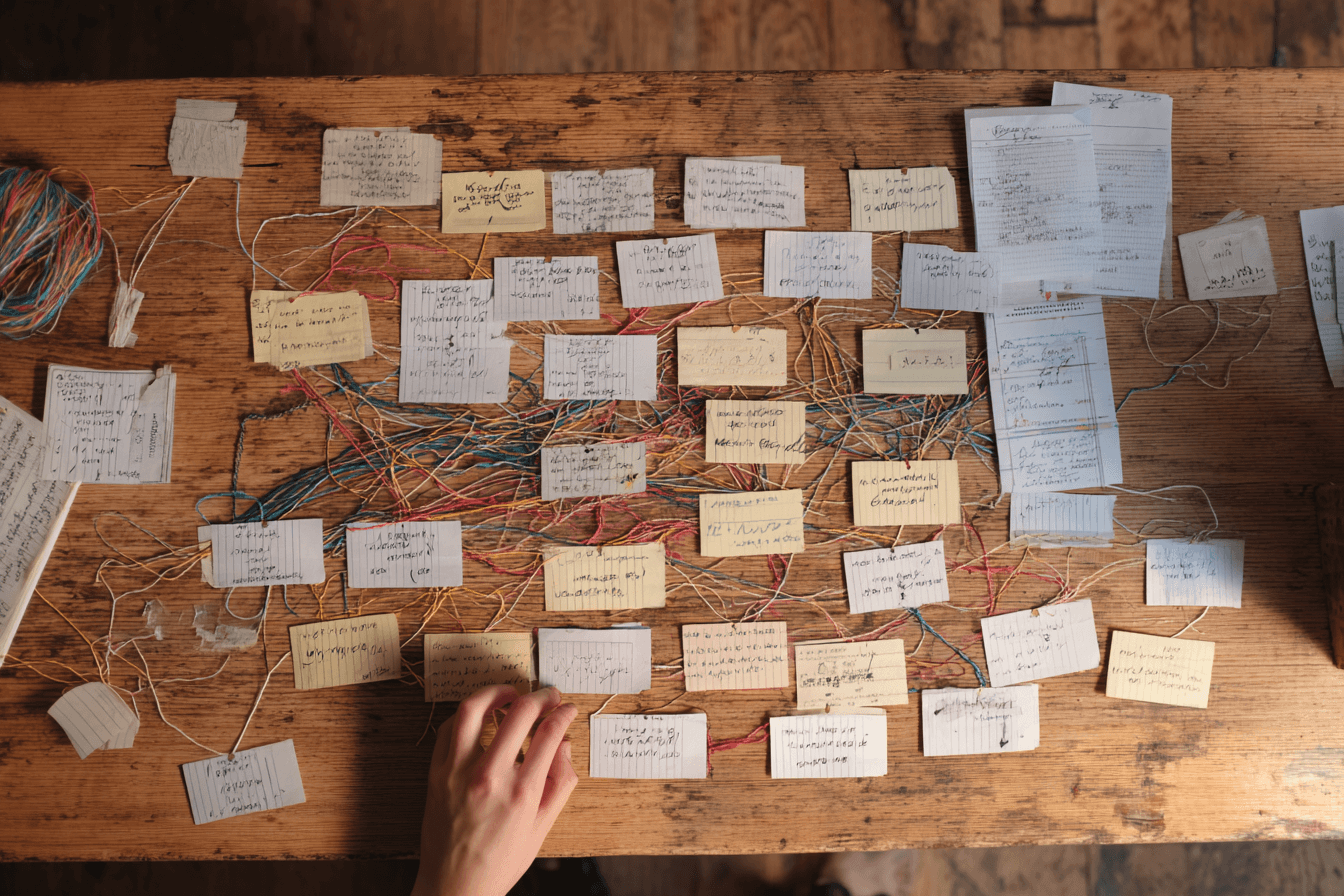
.The whole thing works because anything I tag in a specific way ends up where I expect it. If I encounter something and think "I want to improve this, but not right now," I tag it. It lands in an overview. When I'm ready, I go through that list and pick something up. None of this is the tool. It's the thinking behind it.
AI on my terms
Companies are forcefully adding AI features to their products. These features interact with your knowledge, interact with your content. For the most part, fine. But it should happen on my terms.
Think about starting a journal in your PKM tool of choice. You describe how you feel. Maybe you write that you feel depressed at a particular moment in time. An AI model has absolutely no clue what to do with that information. So it grabs it and suggests: "Hey, since you've been feeling this way, let's use that angle for a blog post." Not slightly wrong. Absolutely wrong. Weirdly unnecessary and potentially harmful.
My stuff should be my stuff. If I want an AI model to have access to my knowledge, I should decide which model is worthy of my data; one I trust not to hallucinate, not to pull irrelevant things. And I should be able to say no to specific content being included. Notion is heavily paired with their own AI agents and models, which works for them, but I can't bring my own. Tana is building deep into the AI ecosystem with no real way to opt out.

Anytype takes a different approach. It offers an MCP server, so I interact with it through an LLM of my choice. No AI crawling over my content to answer queries I never asked. I've integrated it with Claude: whenever I want to research a topic or pull relevant information from my workspace, I can. I decide what gets pulled and I decide what gets written. When I finish a deliverable, it stores to a specific place because I defined that in my environment. Full control.
The template trap
When I first started using Tana, I bought a template. Tana was tough to understand. The onboarding barely existed, tutorials were scarce, and it was my first node-based editor and my first time thinking in objects rather than folders. The template let me explore how a system should work. It let me learn the product.
That's all it did, though. The systems I actually use are mostly my own. I adopted some structures, combined them with methodologies from elsewhere, and built around those. The template taught me the tool; it didn't set me up for success with a working system.
The perfect knowledge system starts out small. It's enticing to go all-in at once: movies, shows, recipes, knowledge, projects, all the tags and fields and connections, everything perfect. Or spend $200 on a complete template promising every framework under the sun. Zettelkasten, experiment setups, loops, cycles, day nodes, sorts, filters. You deploy it and use 1%, if any. It starts to feel daunting. You don't want to mess things up. You might want to customize something but you don't deeply understand how it works, so you might break it. Eventually you stop because it's such a bother.
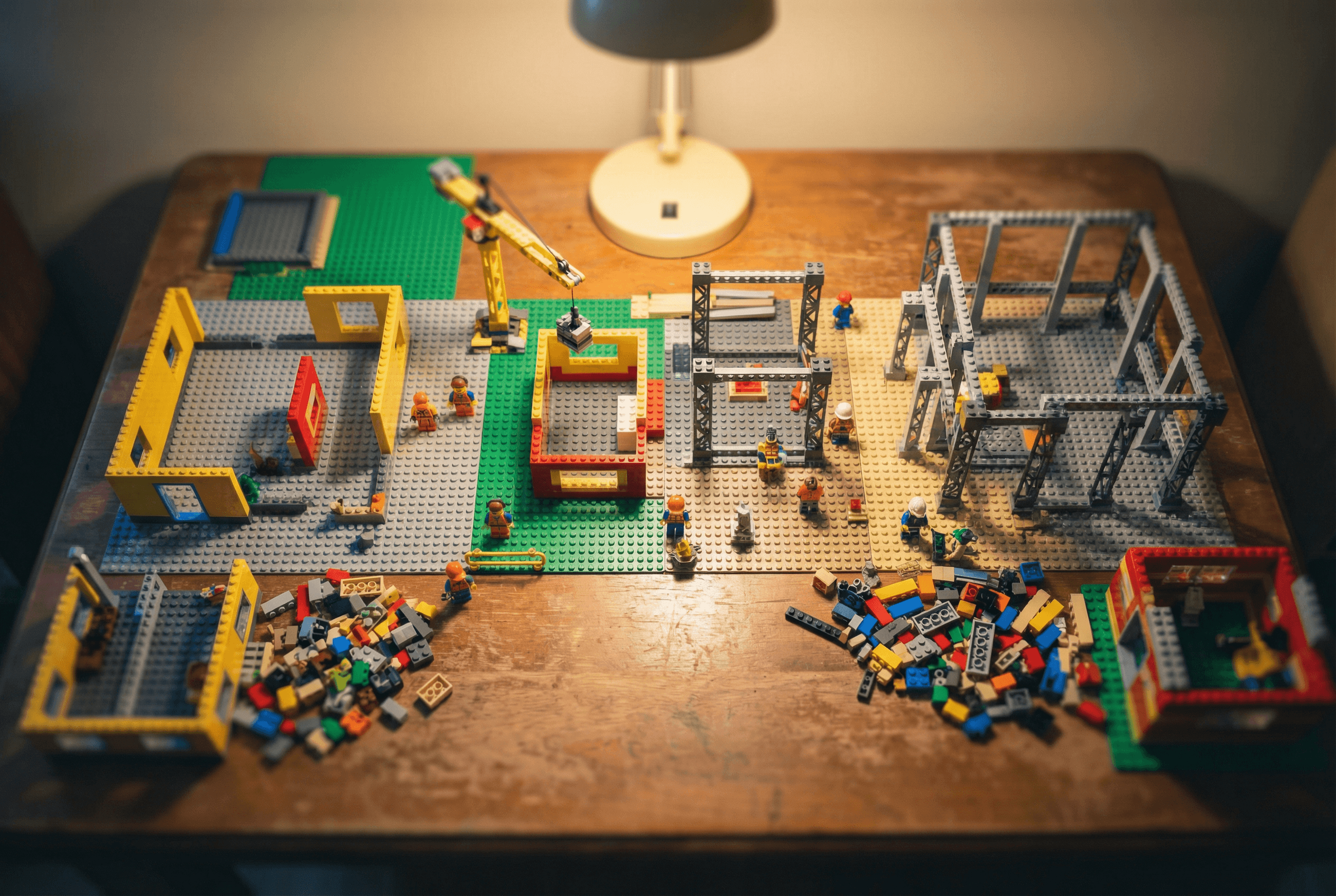
Start with one thing that solves one real problem. The system grows with your understanding of how you think. Four rebuilds taught me that.