Cooked
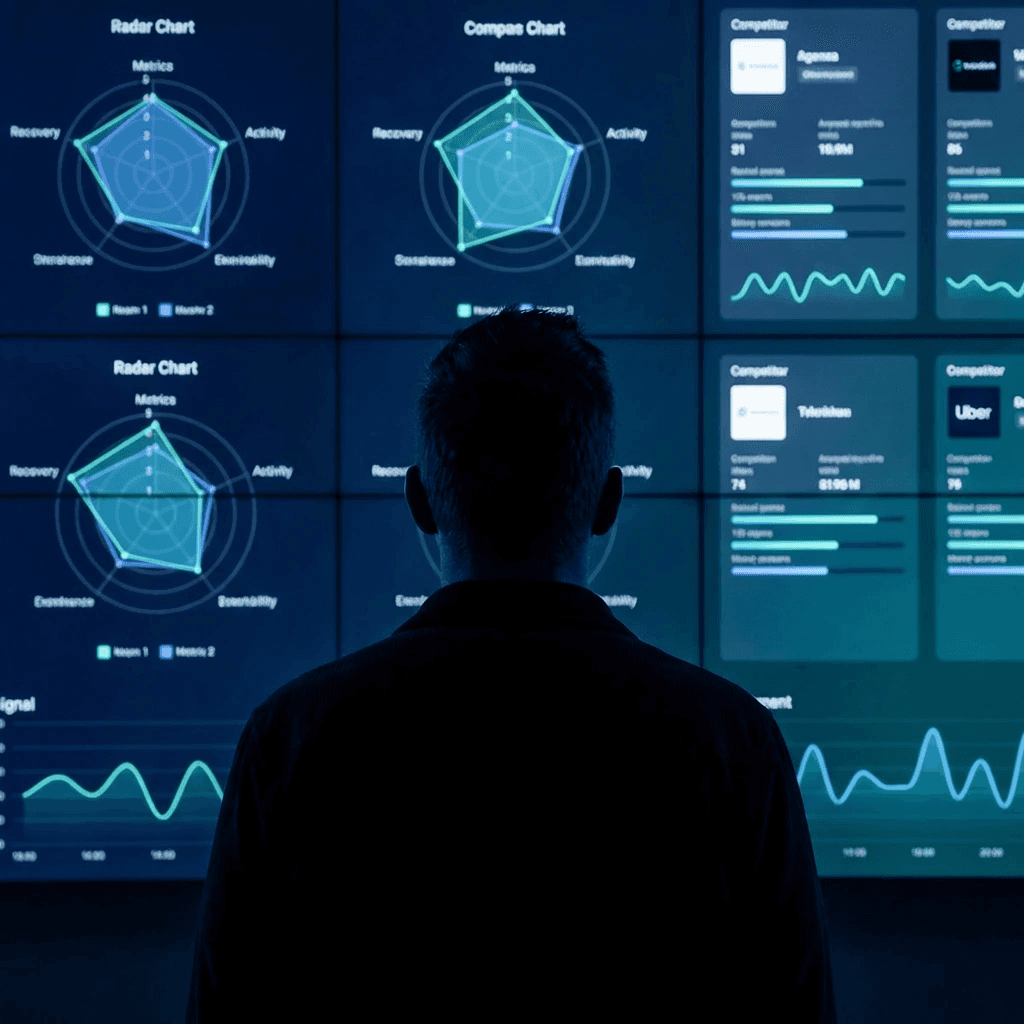
The idea
When I worked in SaaS, tracking competitors was always a challenge. I started in product design, where monitoring how competitors solved key problems for their users directly impacted our roadmap. If a competitor suddenly drops a game-changing feature, you need to pivot. You either have an answer ready in your positioning or product strategy, or you shift your priorities. There's a huge amount of pressure on just knowing what your competitors are up to.
Then I moved to marketing, and faced the same issue again. This time on blog posts, strategic shifts, new marketing pages. As I got deeper into brand strategy, it became about understanding how competitors were moving through the market. Were they updating their positioning? Launching new pages? Changing strategies?
What I noticed across all of these roles: competitors lived in a Notion sheet or an Excel file with a simple breakdown on one pillar. We had an Excel sheet listing pricing, packages, feature counts. We listed marketing initiatives, blog posts. But it was archival storage, not usable information. You dump everything into a spreadsheet and nothing comes of it. People check it once in a while, but for accurate up-to-date knowledge you still end up checking the website. No versioning either; if something changed, there was no way to know unless you manually compared the data.
Cooked was our exploration of what you could do with real-time-ish competitor information and a system that actually gives you alerts as things progress.
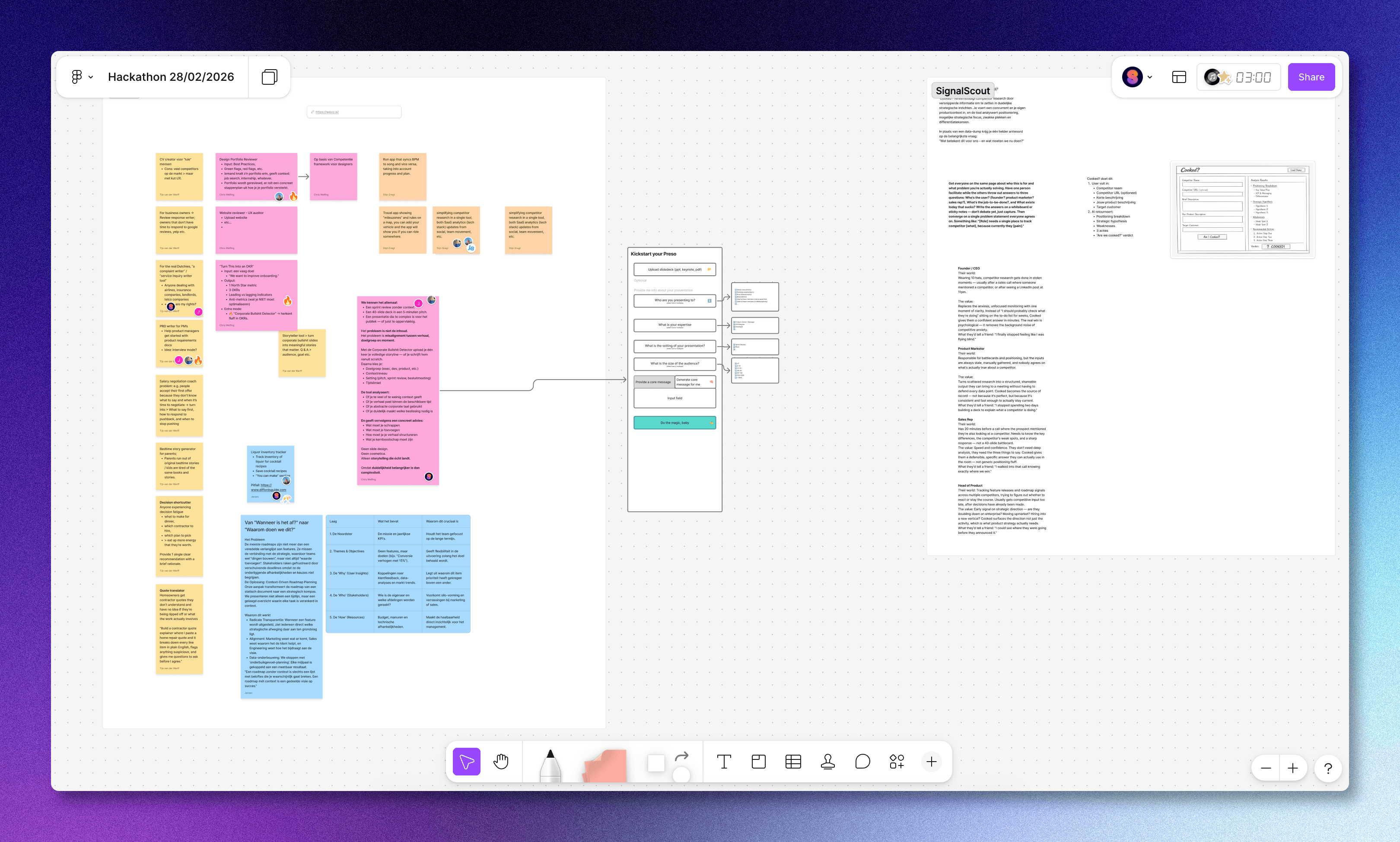
The actual brainstorm in FigJam.
The build
The stack is relatively simple: Next.js with Supabase handling both backend and authentication. For AI features, we adopted a bring-your-own-key philosophy — users plug in Gemini, Claude, or ChatGPT for their analysis.
The core loop works like this. You create your company profile, then list your competitors. You can discover them through the platform's competitor search (it takes your company into account and finds them) or enter them manually. From there you get a host of insights: tech stack analysis of their tooling, vacancies that indicate a potential shift in strategy, blog post monitoring, website changes, pricing page changes, AI-based analysis of their purpose, mission, and vision.
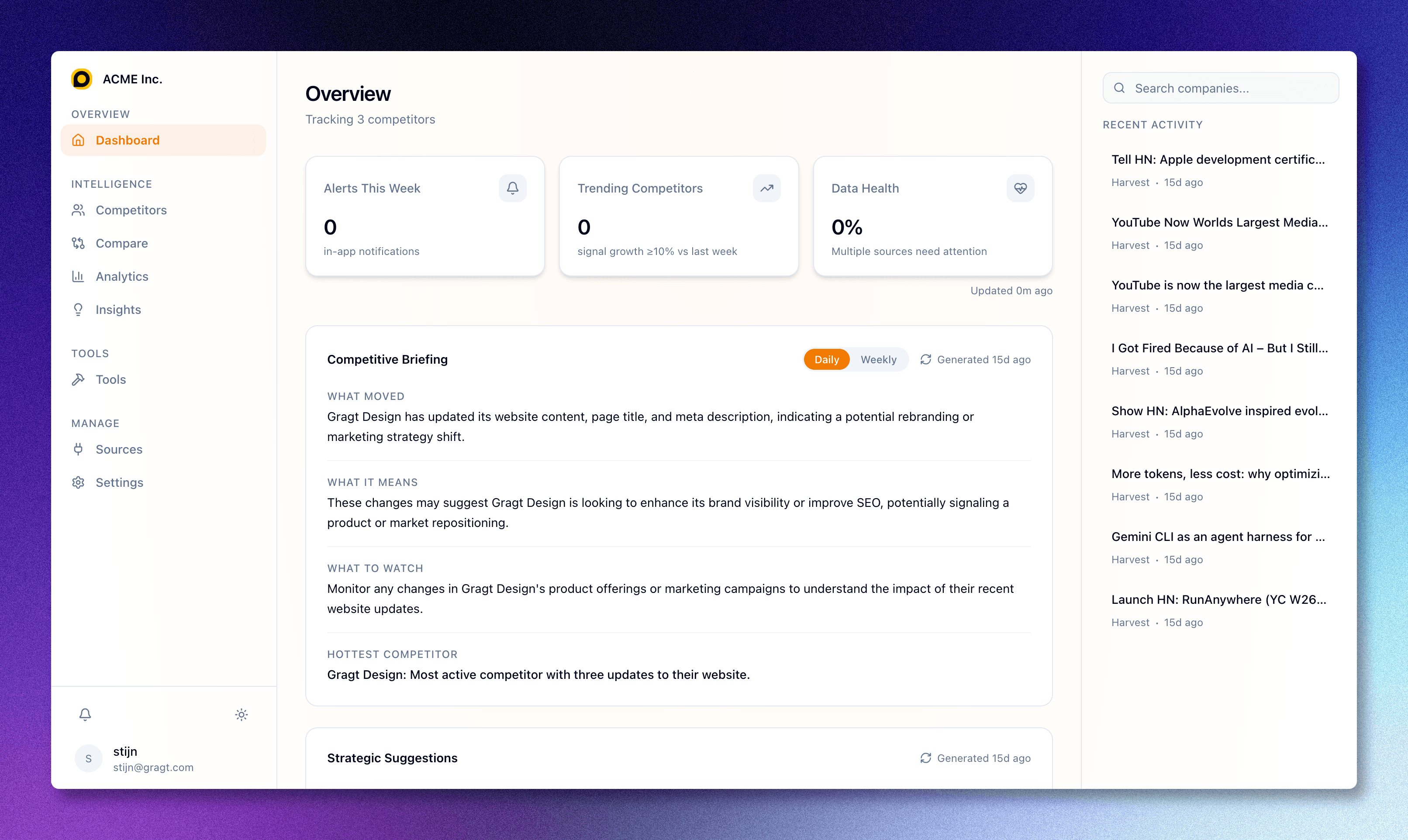
Dashboard, showing quick insights and a briefing.
There are niche micro-tools embedded in there too. A total addressable market calculator that uses your data and competitive data to identify the total eligible market. A competitive radar where you can fan out geographically and see which competitors you face in which countries.
The core application got built during a hackathon afternoon. Four friends, laptops, no agenda. By the end of that session we could launch the platform locally, log into the backend, set up a company, and add competitors. After that, roughly two weeks of partial daily work to flesh out the remaining features, optimize the UX, and adjust the logic.
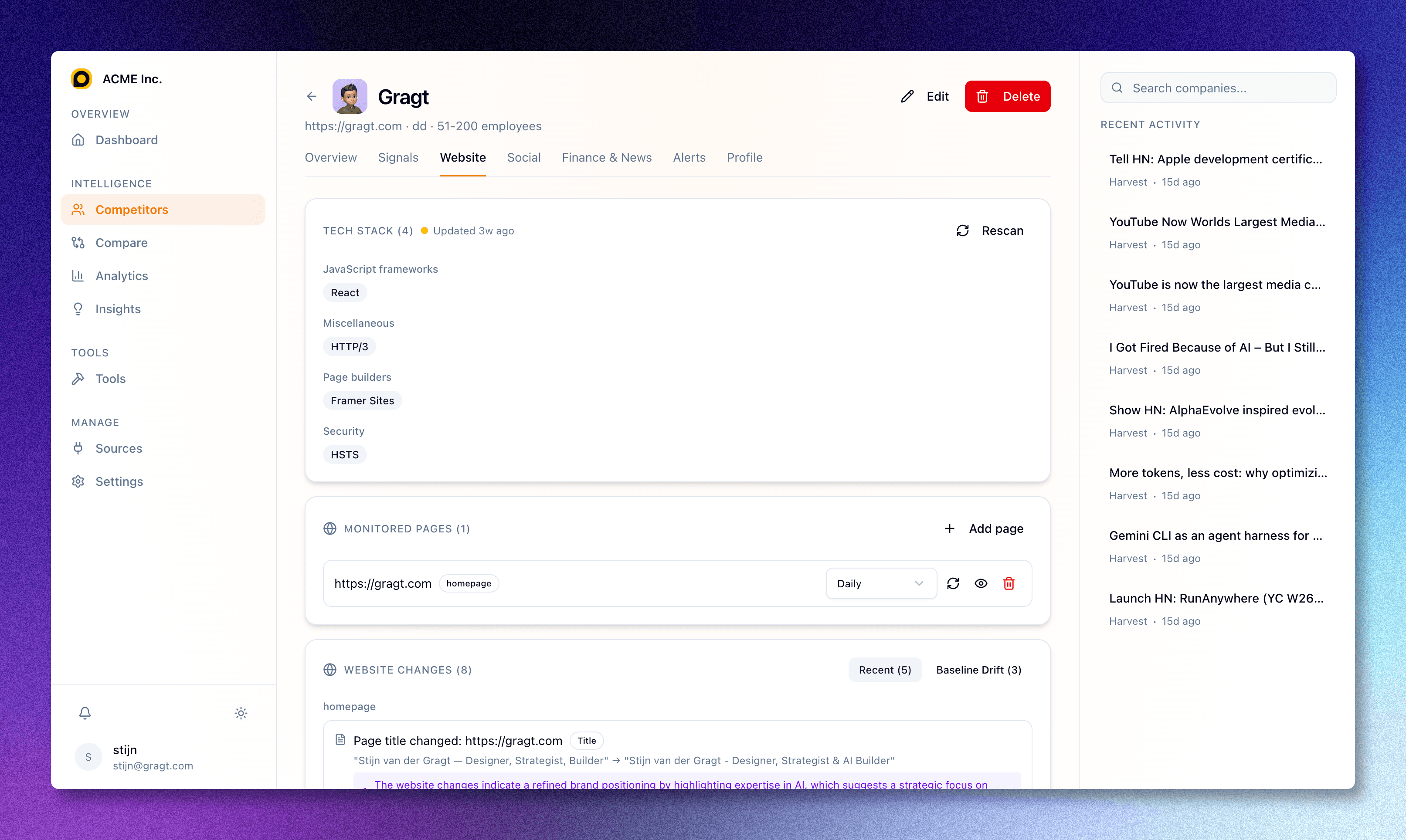
Competitors have their own profile, with detailed information and breakdowns.
The hiccups
The scraping is still inefficient. That's the biggest unsolved piece.
AI-based analysis was rough too. When you let AI compare two things and draw conclusions, you run into inherent uncertainties — that's the nature of how these models work. The output isn't always wrong, but it's imprecise in ways that are tough to pin down and tougher to fix. The hardest part with any vibe-coded project is getting into the details and getting things right. If you don't understand how your product works under the hood, you can't optimize it. You can tell the AI "improve it," but you don't know how to improve it. Getting to the nitty-gritty, crafting a prompt that addresses a specific issue productively — that's where the real challenge sits.
We also hit a workflow problem during the hackathon. It was mostly one person doing the vibe coding while the others waited for it to finish. That needs to be more streamlined if we do this again.
One mid-build pivot that worked out: we started with a different backend service and Prisma, which is what Claude Code suggested. But I have more experience with Supabase, and I asked it to switch. On the fly, no friction. Supabase is an exceptional product for builders who want to get something up and running quickly; it was the right call.
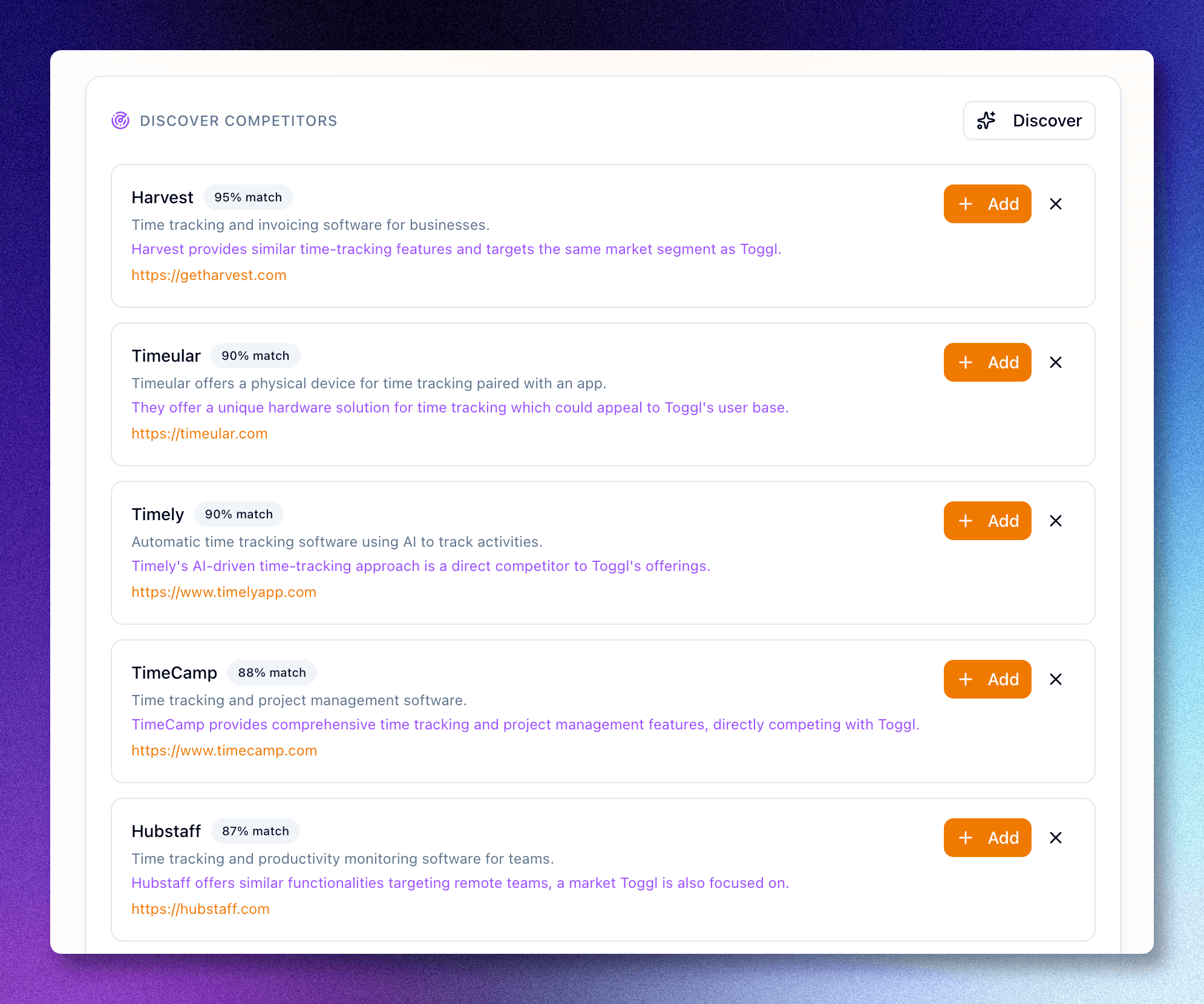
Discover competitors with AI.
The takeaways
Each project like this compounds your builder confidence. I now have more affinity with this kind of work than I had before, and I had the confidence to say "No, I want to run with this backend instead because I've got more experience with it." That's a skill you only build by building.
What's still on the roadmap: timely notifications. Slack integration for pings, email digests with weekly breakdowns, real-time alerts via phone or email. The "real-time" part of real-time intelligence hasn't landed yet.
Cooked lives in a place where a lot works and a lot still needs work. I have an internal roadmap listing improvements, bug fixes, changes that should happen. When I have time, I tinker with it. But the best part of this whole thing is that four people got together, shared knowledge, experimented, and walked away with a working-ish product. That's the part that keeps it alive.
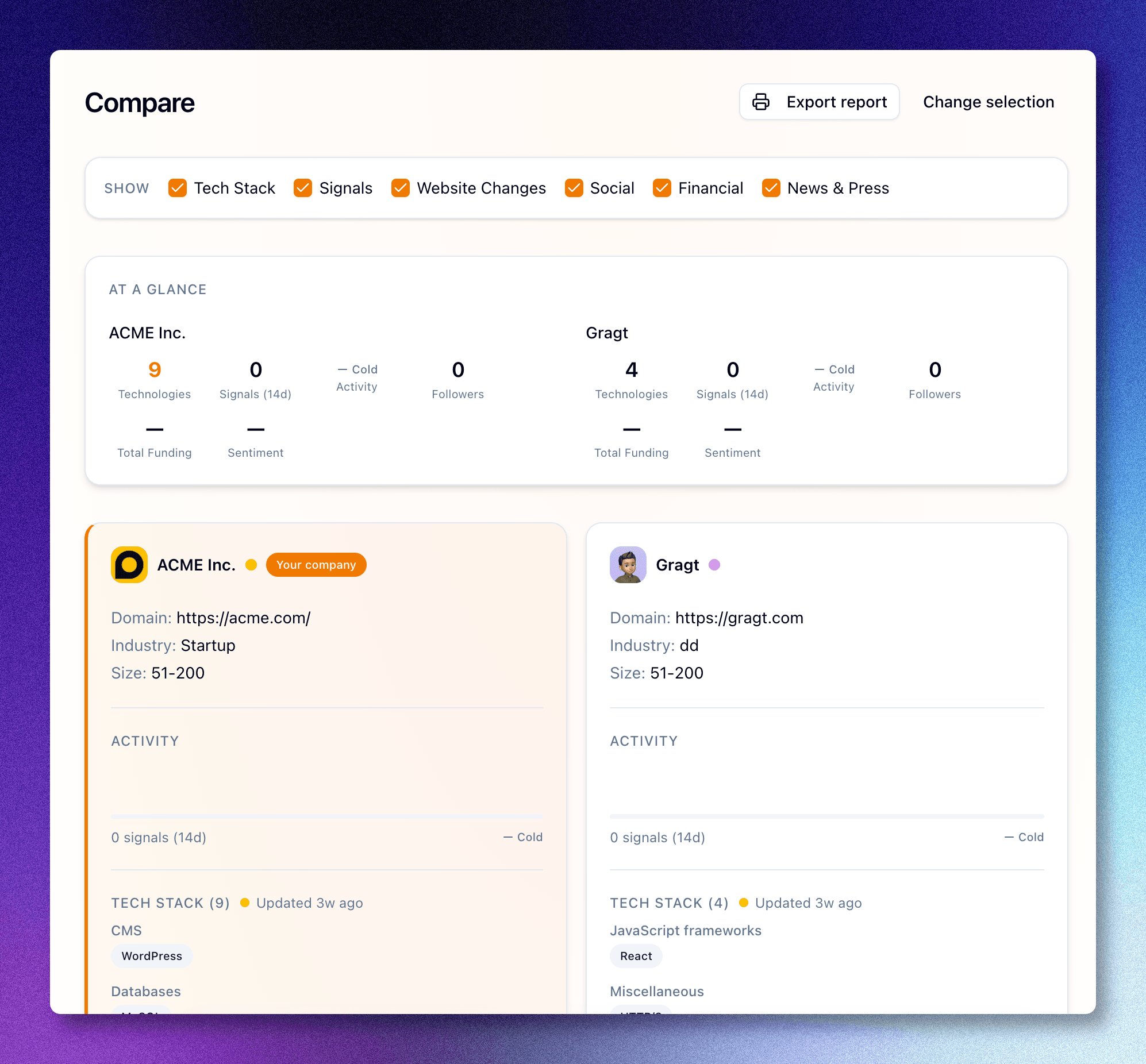
Easily compare tech stacks and other signals with your competitors.
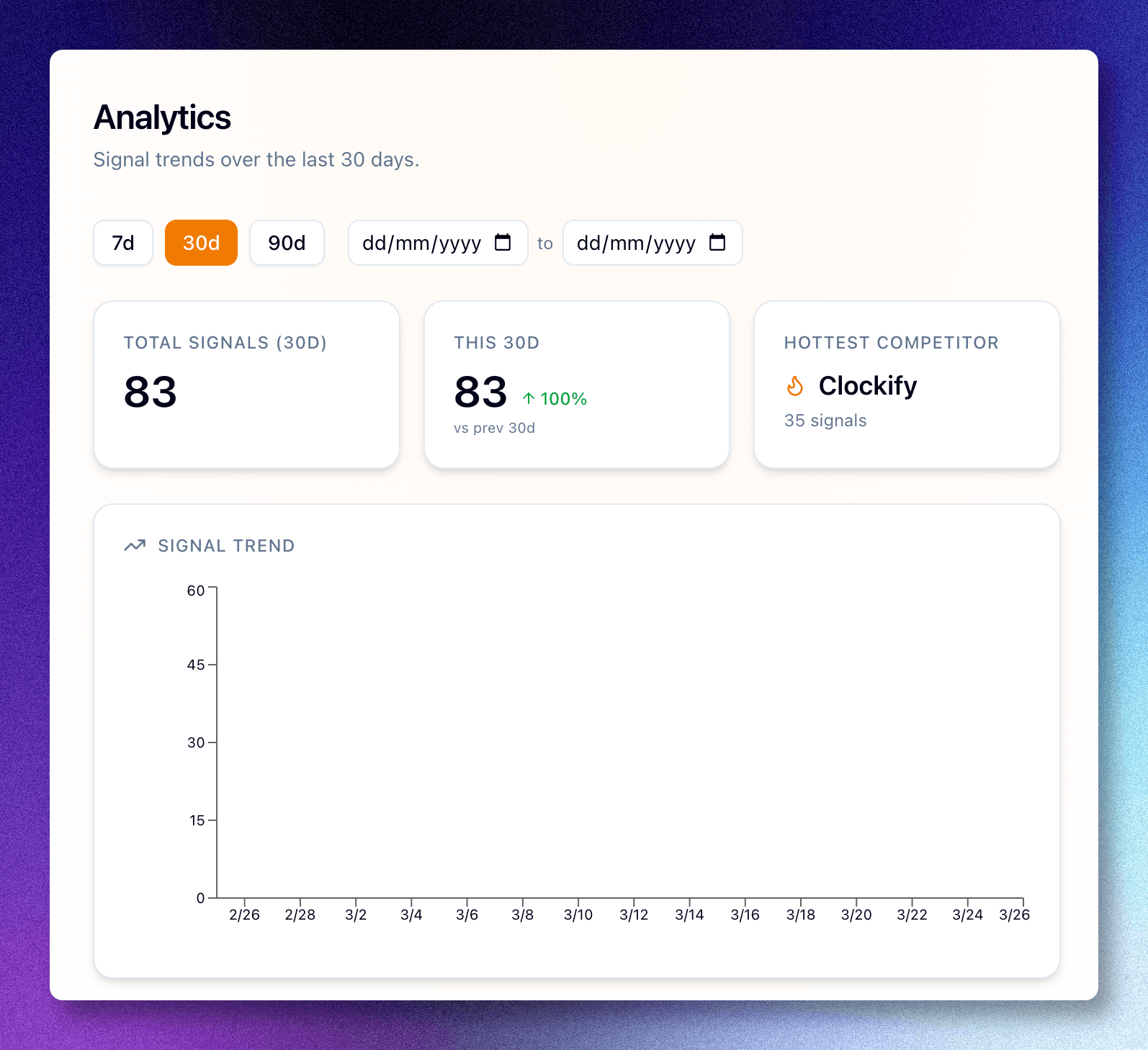
Get insight over time with analytical data and reports.
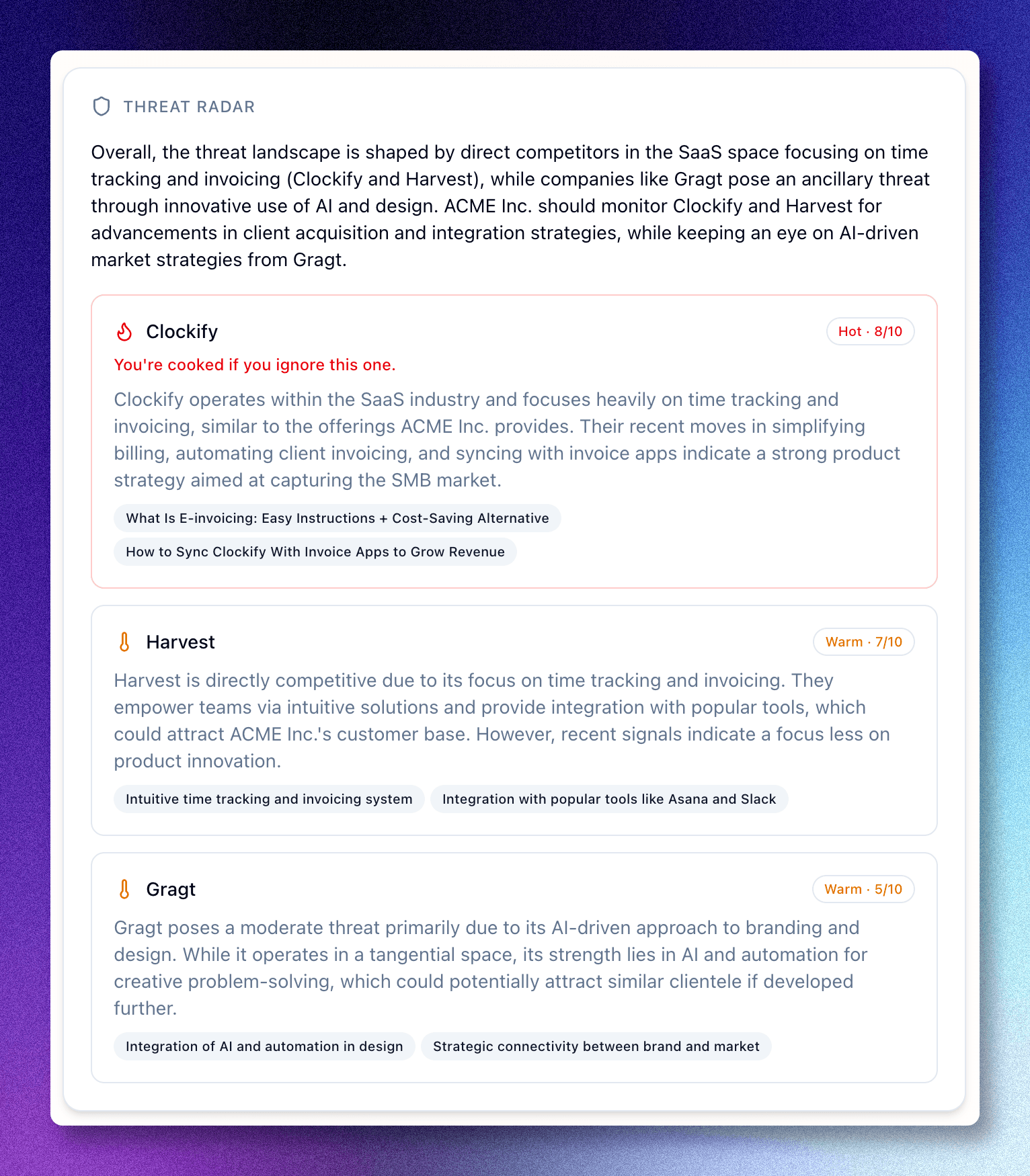
Calculate a unique "cooked" score for every competitor.