Gragt - Brand
I spent two months tweaking line heights instead of hitting publish. Building gragt.com — a personal brand site, a corner of the internet that's mine, and the project that taught me perfectionism is just fear with better aesthetics.
Time
2026
Status
In Progress
The idea
I've always had an entrepreneurial mindset. Building a personal brand was always somewhere in the back of my head. But I was afraid of coming across as an imposter, afraid of not adding any value, afraid of not being anything at all. Figuring this out and actually making it happen was something that stayed difficult for years.
Work didn't help either. When you come home after a full day, you feel less inspired, less inclined to work on something like this. It made building a personal brand feel like this permanent side project that never got any oxygen.
What changed is that I finally have the time, energy, passion, and a little bit of confidence to build this out. To make it something bigger than myself. Experiment, have fun, create, craft, destroy, see what happens.
The vision was always the same though. I wanted my own little hub of the internet. Social media exists, Instagram, YouTube, TikTok. UGC platforms like Medium and Substack are amazing. But all of that is controlled by other people. I wanted my own small world where I could do whatever I wanted. If I want to write up a case study, I can do that. If I want to share quotes from people I find inspiring, I can do that. A project about our music? Sure. Full creative autonomy.
The web is turning into this massive AI-driven monstrosity. Having a little bit of control in my own corner of the internet is such a cool feeling.
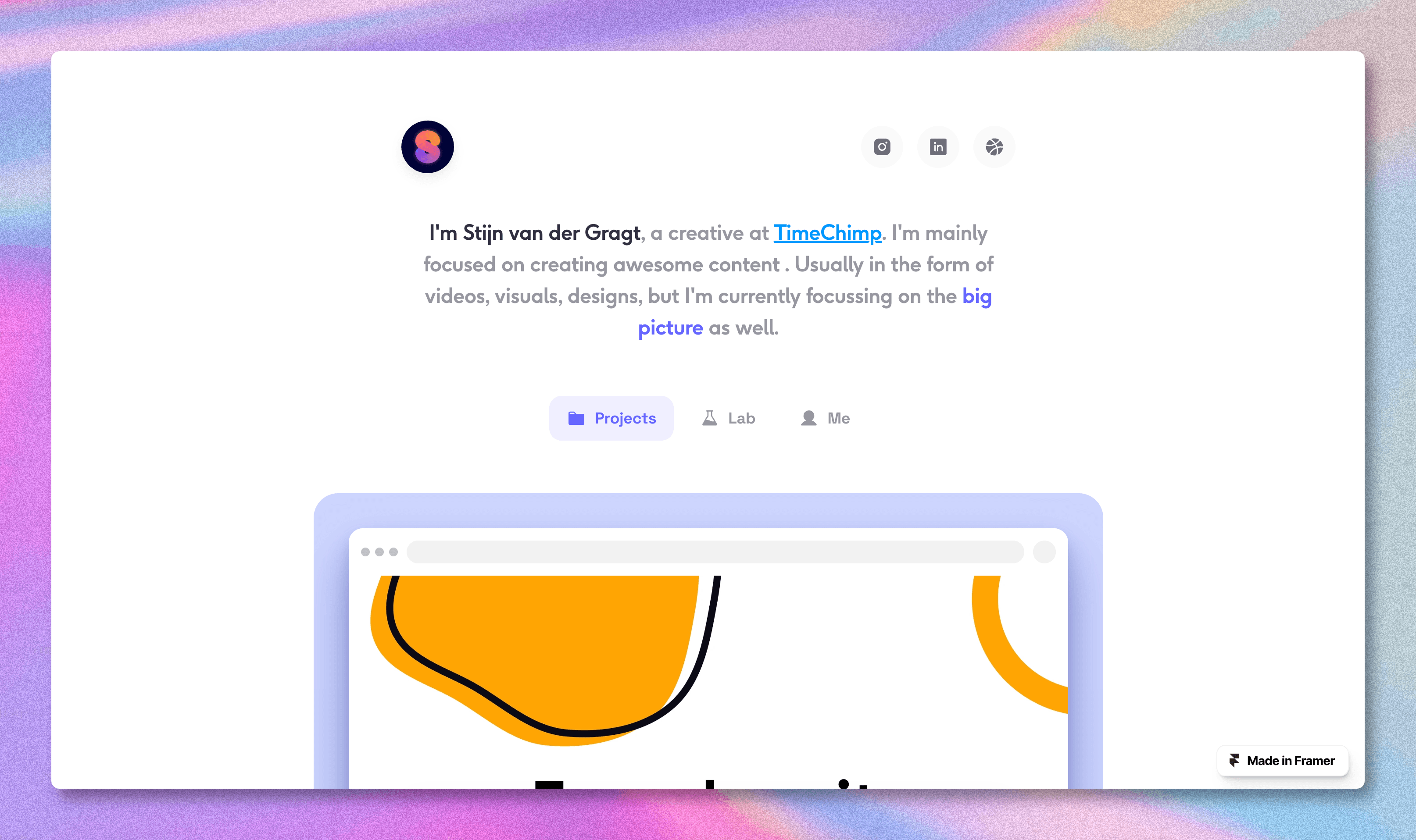
Older portfolio
The build
For the longest period of my life, my website ran on Semplice. It's a WordPress plugin that turns WordPress into a publishing setup for creatives. Still a valid approach; I'd recommend it to anyone willing to spend the time. But I needed something different.
I then switched to a ready-made template from UI8, a store for creative professionals. That was fine, but it ran on HTML. Making changes meant coding and uploading files through an FTP server. Not ideal.
Then I found Framer.
I'd actually used Framer years ago, back when it was a prototyping tool. I used it to prototype a mobile app with actual variables so you could store and record data, which was pretty sick. Now Framer is fully focused on websites, and it's become a great product.
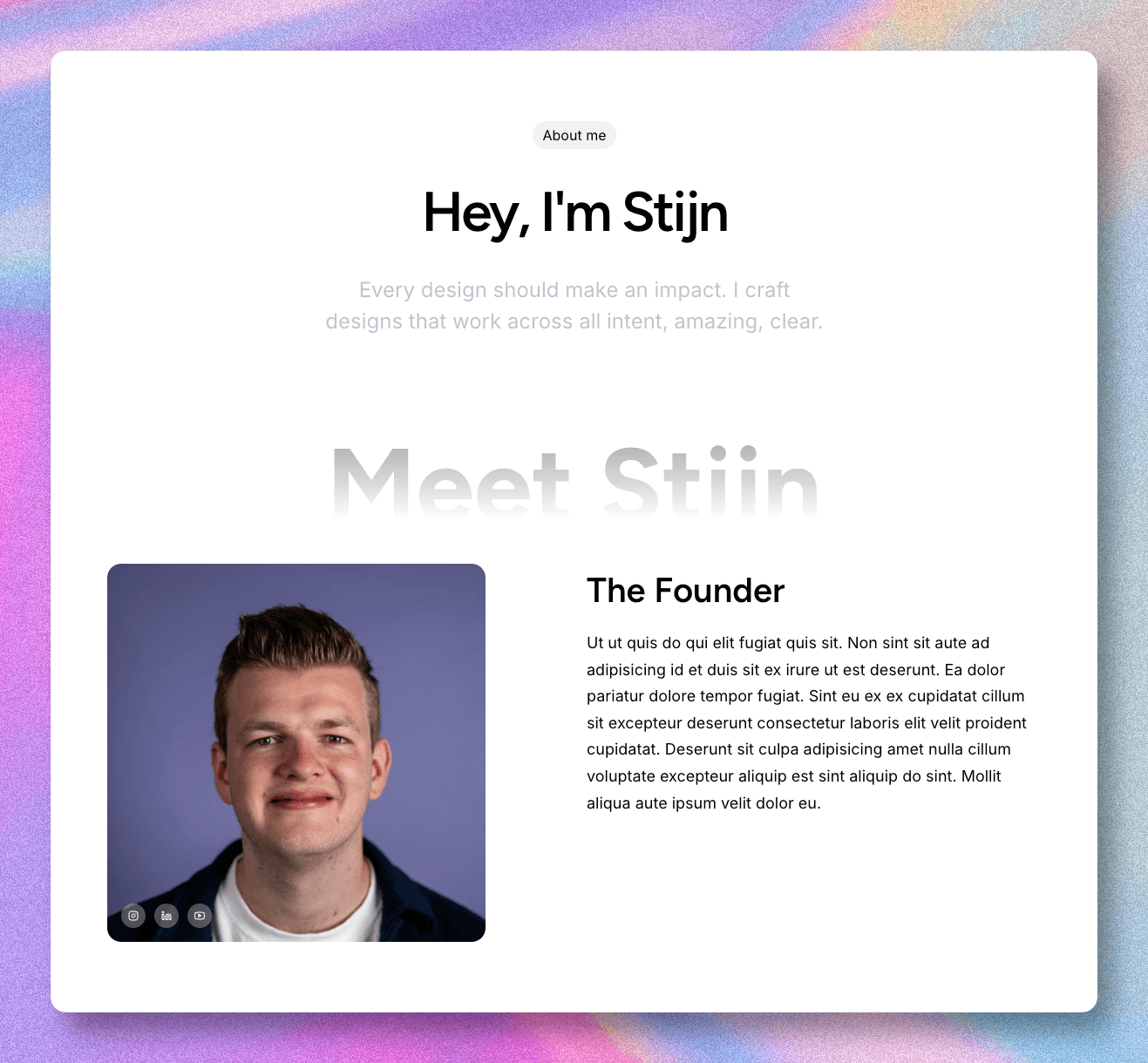
A more recent build, still work in progress
Webflow is still my pick for larger corporate sites with a hundred or more pages that need to synchronize and update at once. But for a personal site, Framer wins. You drag and drop objects similar to Figma rather than thinking in divs and flexboxes. It has the right amount of AI sprinkled in; it's not going to hand you a finished page, but it gives you solid guidelines to build something good. The CMS works well for solo publishing, and the UX of the product itself just feels right. Coming from Webflow, the difference in creative freedom is noticeable.
The site itself is structured around three main things: my work, a blog, and the lab you're reading right now. The work section is where client projects and side projects live. The blog is for longer thinking on design, strategy, and building. The lab is for experiments and things I've made. I wanted a structure that could hold anything without forcing me to commit to just one format.
On the branding side, I created some basic principles before getting started. Nothing fully fledged yet, and that's fine. I've always been a fan of branding because it sets you apart. Having some form of principles before you begin is a safety net for when you inevitably run into questions. How do I want to come across? How should my bio sound? Those decisions are just as much a part of this as the design itself.
The hiccups
The hardest part has been hitting the publish button.
I had the site in draft for one or two months. Constantly tweaking. Not confident that my logo was fine. Not confident that my colors were fine. Not confident that my typography would look great. My line height, for fuck's sake. My paragraph cutoff rate. It's been a roller coaster of making design decisions, making brand decisions, writing guidelines, and never actually feeling ready to publish.
I can design for others without this problem. The moment I start working on something that's near and dear to my heart, a complete passion project, I struggle because I want it to be absolutely pixel perfect. In that pursuit for perfection, you fail to step away and see the good things that are already there. Even though you have that knowledge, you never really listen to it at the start.
The mindset shifted slowly. People said "just go for it." I had a creativity sprint with Claude where I realized the worst thing that can happen is... nothing. A coach told me "no one's gonna care, so why not publish anyway?" The realization that you'll never feel ready has been one of the biggest things for me.
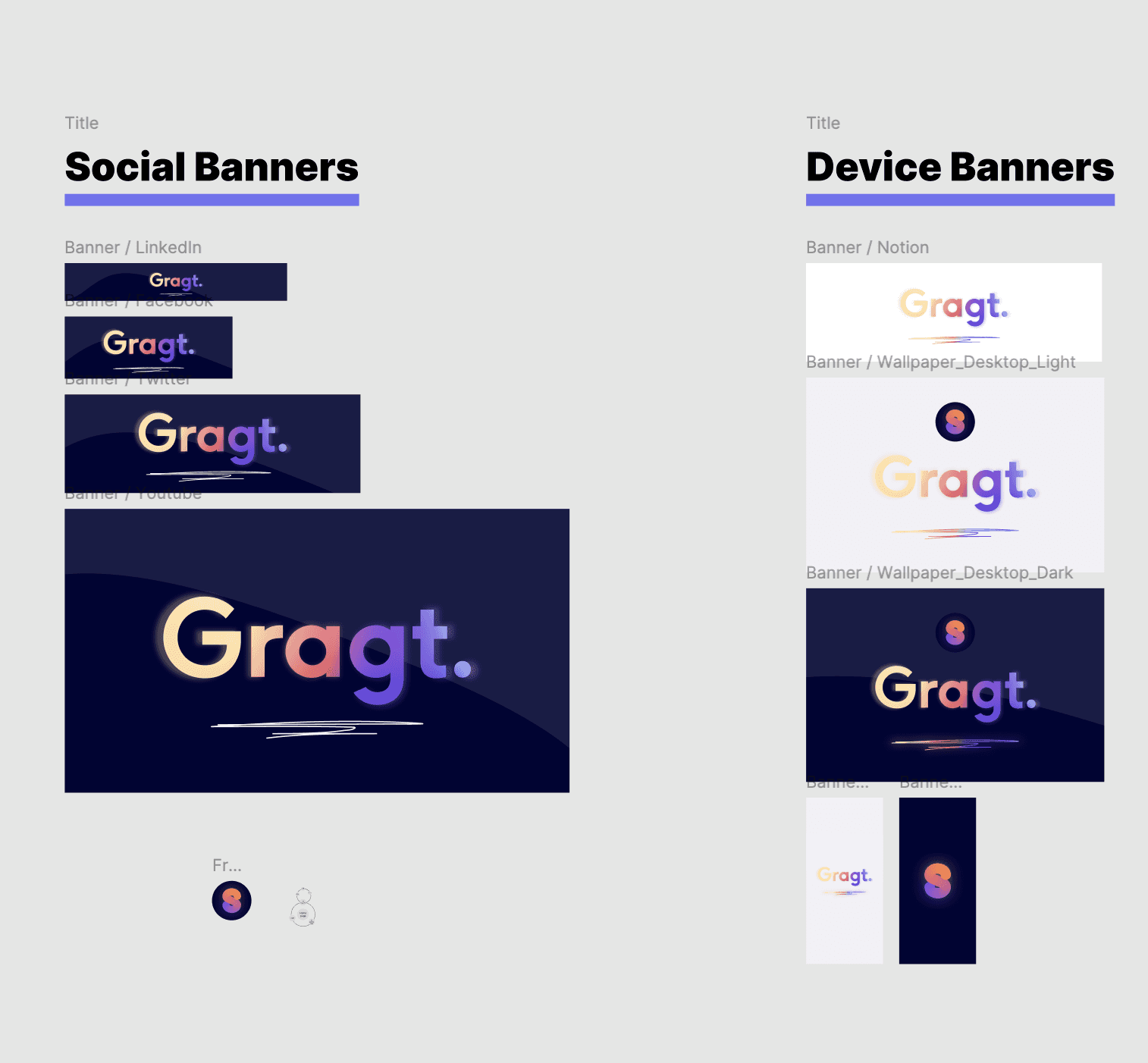
Went all out with the branding.
The takeaways
Something I did not expect: once I published the first version, I became more confident and more at ease with posting small incremental updates at speed. Where I would first obsess over every pixel, every heading, every font being perfectly placed, I'm now in a mindset where it needs to be good, it can't be trash, but when I'm 80% there I just post. I'll make those changes over time anyway.
Not having the pressure of "there's nothing and you need to publish now" versus "publish and make incremental changes along the way" has been a game changer.
If I started over tomorrow, I would get the basics in and publish right away. Build in public. Show that you're not perfect, because no one is. There's a line in Meditation for Mortals by Oliver Burkeman, right in the first chapter: "Imposter syndrome? You might believe you need more experience or qualifications in order to feel confident among your peers; but the truth is that even the most experienced and qualified people feel as though they're winging it." People in junior positions have it. People in senior positions are also figuring it out. CEOs are also just figuring it out. A lot of the time, people have no clue what they're doing.
Having the confidence to post an imperfect version of yourself and then building and learning in public is strong. It beats perfectionism, stalling, and getting stuck in a negative creative spiral where you're constantly thinking "I have to do X before I can do Y" until nothing gets done.